ASUS TUF Gaming A16 (2025) vs Acer Nitro V 15 (2025)
Get the TUF Gaming A16. If every pound or dollar counts and you'll only play at 1080p plugged in, the Nitro V 15.
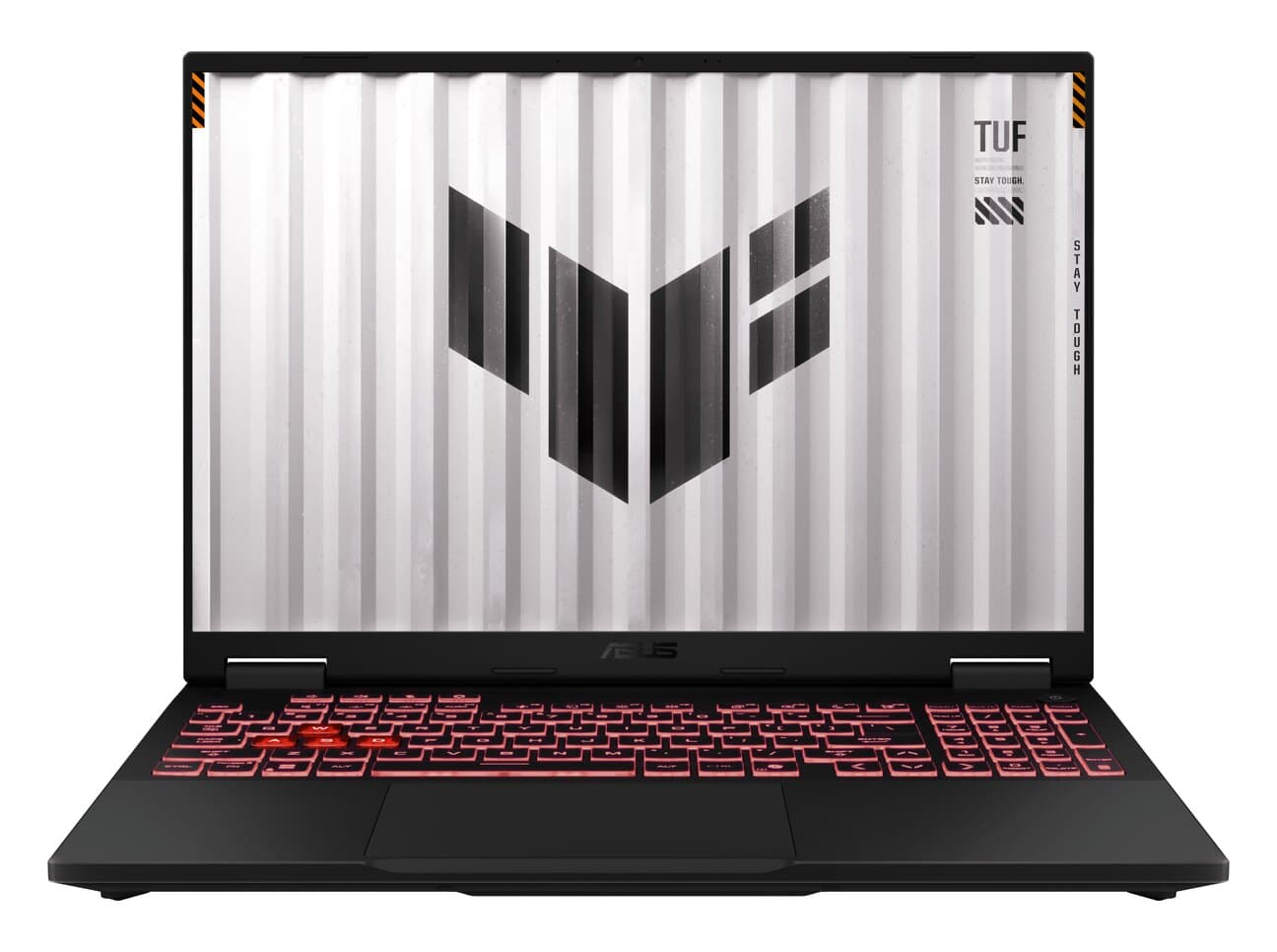
ASUS TUF Gaming A16 (2025)
A big-battery 16-inch that games well and lasts all day off the plug. Very loud in Turbo.
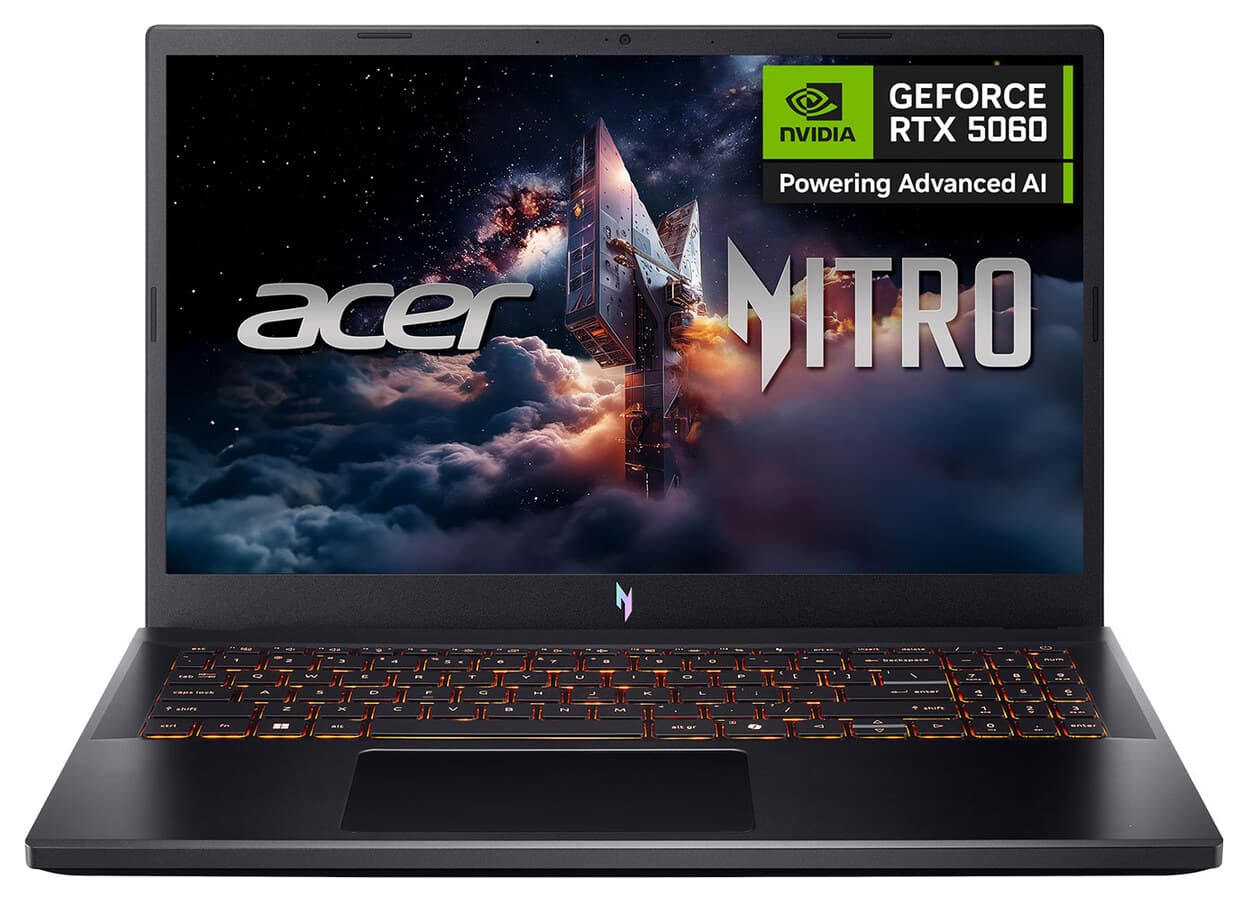
Acer Nitro V 15 (2025)
A cheap way to play at 1080p with RTX 50 graphics. Hot, loud and a washed-out screen.
We earn a commission from these links.
The TUF A16 lasts 12–13 hours of light use off the plug and has two memory and two SSD slots. The Nitro V 15 is cheaper and runs most new games at about 60 fps on high at 1080p, but it runs hot and loud, its screen looks pale and it uses older DDR4 memory.
- —You want a laptop for games and a full day of work or classes.
- —You want room to add storage.
- —You'd like a 16-inch screen.
- —You want RTX 50 gaming for the least money.
- —You'll game plugged in at a desk.
- —You need a Thunderbolt 4 port.
Key differences
Pros and cons
- +12–13 hours of light use
- +Full-power graphics
- +Two memory slots and two SSD slots
- −Very loud in Turbo mode; headphones help.
- −The 1920×1200 screen is a bit washed out and reflective.
- −Cheaper versions ending in "I" (FA608UHI, FA608UMI) have a 144 Hz screen and a smaller 70 Wh battery.
- −The number pad makes the keyboard a little cramped.
- +Cheap RTX 50 gaming at 1080p
- +Thunderbolt 4 port
- +Upgradable memory and SSD
- −Gets hot and loud in demanding games; quiet in light use.
- −The screen shows only about two-thirds of the normal colour range, so it looks pale.
- −About two hours of gaming on battery, five to six and a half of light use. It charges from a barrel plug, not USB-C.
- −It uses older DDR4 memory and a 13th-gen Intel processor.
- −Make sure it's the 2025 model: ANV15-52 with an RTX 5050 or 5060. The same name was sold with RTX 3050 and 4050.
- Is the TUF Gaming A16 worth it?
- Is the Nitro V 15 worth it?
- Legion 5 Gen 10 vs LOQ 15
- Legion 5 Gen 10 vs TUF Gaming A16
- Legion Pro 5i Gen 10 vs Strix G16
- Zephyrus G14 vs Strix G16
- Best gaming laptops
How we reached this verdict
We compared independent expert reviews with the manufacturer's specifications, then checked it's sold at a major retailer where you live. We don't test products ourselves.
Sources: Notebookcheck, PC Gamer, Tom's Guide, TechRadar, manufacturer specifications.